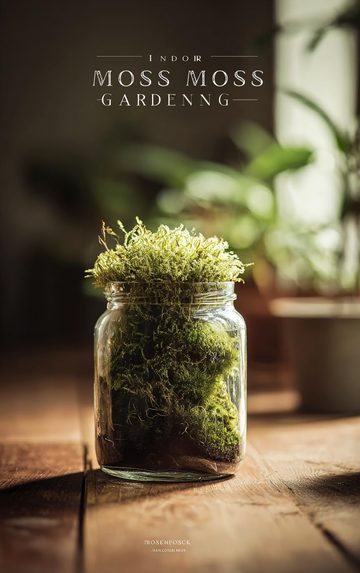
Indoor Moss Gardening
by Elliot Greenfield · Gardening · indoor moss
A beginner's guide to moss terrariums, kokedama, living moss walls and seasonal moss care for small indoor spaces.
Home › Reading guides
A brown patch does not tell you whether a moss terrarium needs water. Too much water, heat in direct sun, species mismatch and drying out can look similar. Use this small diagnostic checklist to observe the jar before changing it. It is general orientation, not a species-specific diagnosis.
Indoor Moss Gardening by Elliot Greenfield covers beginner moss projects, terrariums, kokedama, moss walls and seasonal care. It is our strongest paid seller in the recorded 90-day KDP tiers, not an independently ranked bestseller. The checklist below can be used without buying the book.
A beginner's guide to moss terrariums, kokedama, living moss walls and seasonal moss care for small indoor spaces.
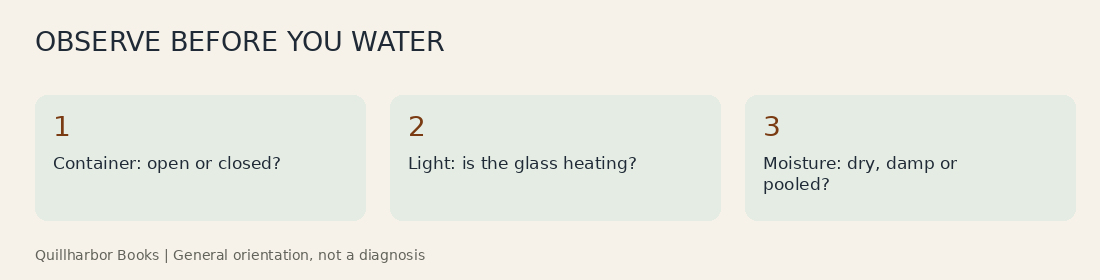
Write down whether the container is closed, open or a shallow dish. Closed containers retain more humidity and need less frequent watering; open containers dry faster. University of Missouri Extension notes that the higher humidity of a closed terrarium also increases disease risk. There is no one watering timetable that fits both.
| What you see | Inspect first | A cautious next step |
|---|---|---|
| Glass wet all day; water pooling at the base | Wet substrate and decaying leaves, not just a little morning condensation | Pause watering. Vent the container and remove dead plant material. Do not mistake a gravel layer for a drain: water still stays inside the jar. |
| Brown or pale patches on the window-facing side | Whether direct sun heats the glass during the day | Move out of direct sun into suitable indirect light; avoid changing watering and location simultaneously unless the jar is clearly overheating. |
| Dry substrate and little condensation | The moisture near the moss and whether the species belongs in a humid enclosure | Add a small amount of water only if the growing medium is dry. A dry-looking lid alone is not enough evidence. |
| Fuzzy growth on dead leaves or wood | Decaying material, crowding and excess moisture | Remove affected dead material with clean tools; reduce excess moisture and improve ventilation. Seek species-specific advice if living growth keeps declining. |
At about the same time each day, note: light exposure, whether the glass is warm, condensation, substrate moisture, color changes, dead material, and what you changed. Take a photo from the same angle. Adjust one factor at a time so the next observation tells you something.
University of Missouri Extension: Terrariums explains container choice, moisture, light and maintenance. Checked November 24, 2026. This is an observation checklist, not a claim that every moss species needs identical conditions.
Moss gardening and moss terrariums: a beginner's Kindle guide · Self-Help, Health & Practical Nonfiction · Free-days calendar · Series reading order · All 165 books · Reader favorites
Titles in this catalog are created with generative-AI writing tools, disclosed to Amazon. We are the publisher side of these books, so this guide is not an independent review. Prices recorded 2026-11-18 unless marked as checked 2026-11-23; Amazon is authoritative.